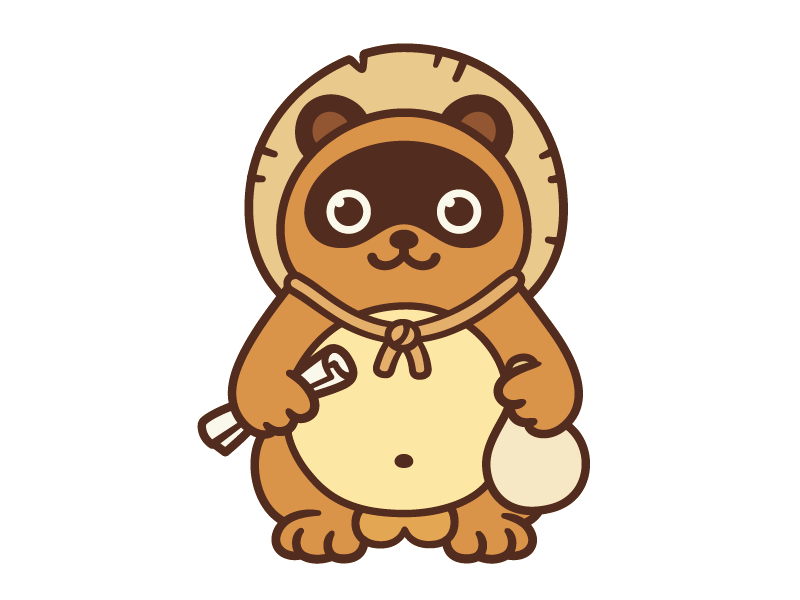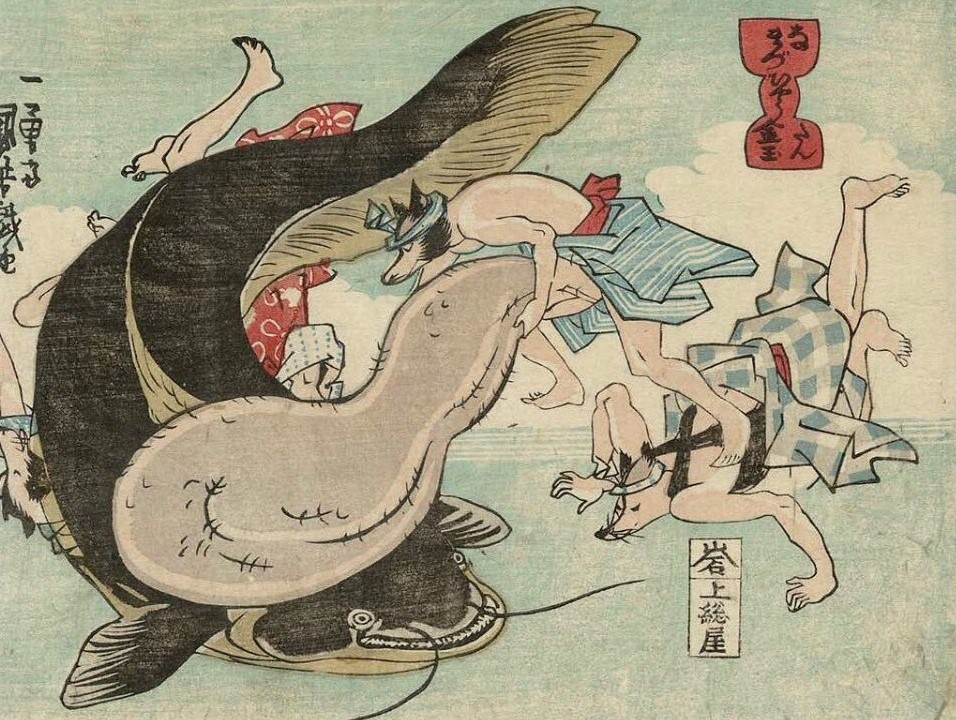
If you ever visit Japan, watch out for these creatures. They can shapeshift into anything, perform illusions to trick you, and worst of all, they might use their magical ballsack to attack you!
The Odd Statues in Kyoto
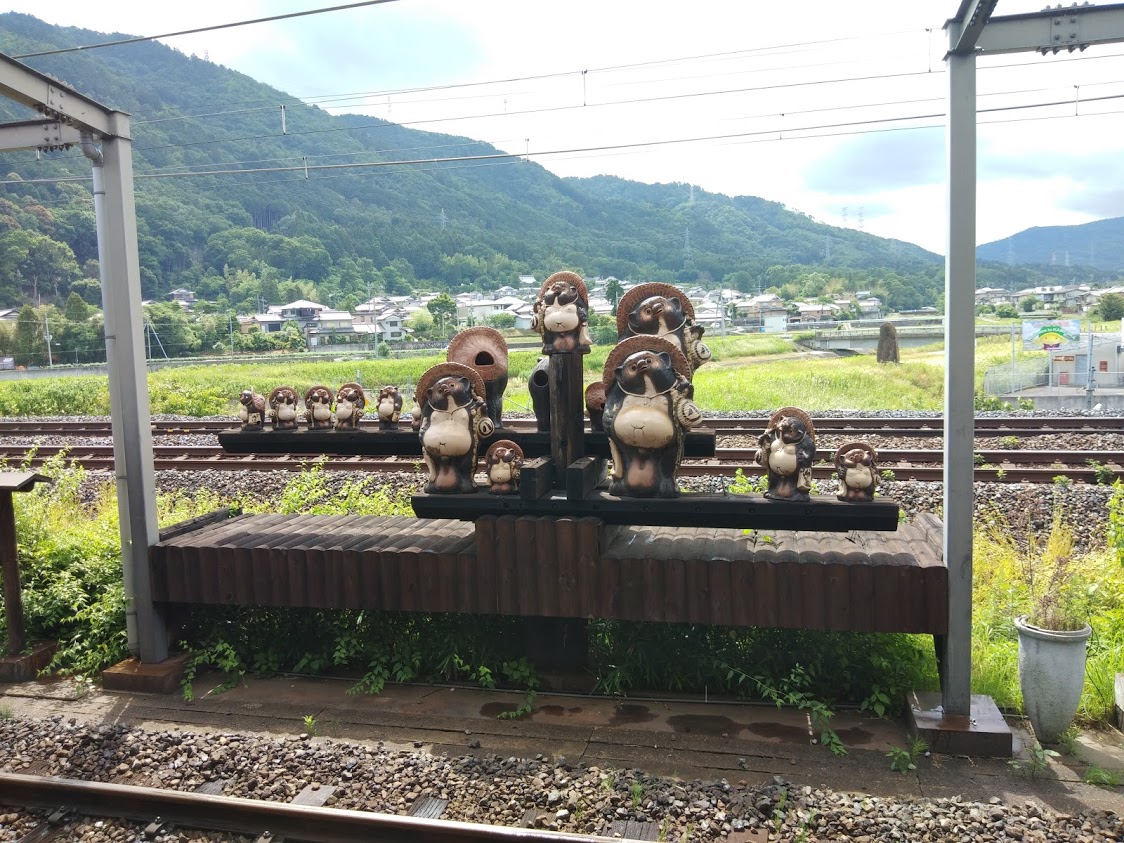
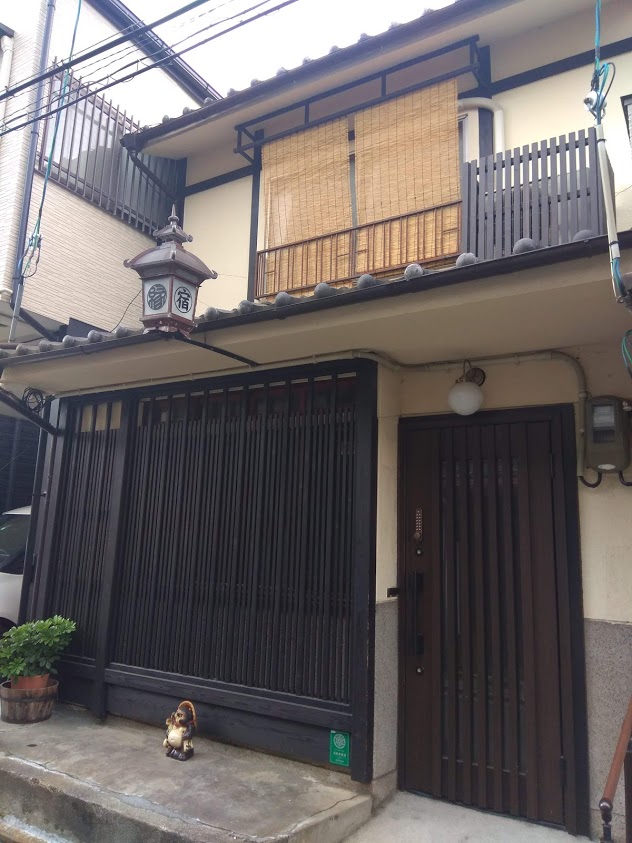
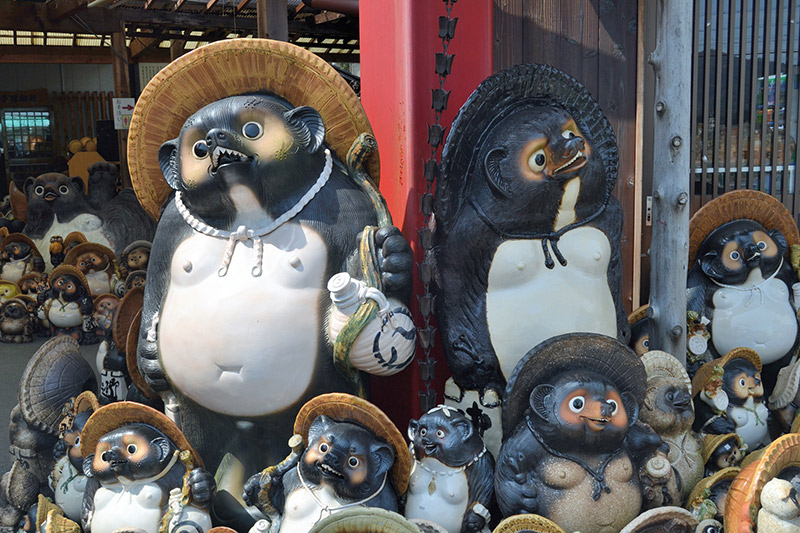
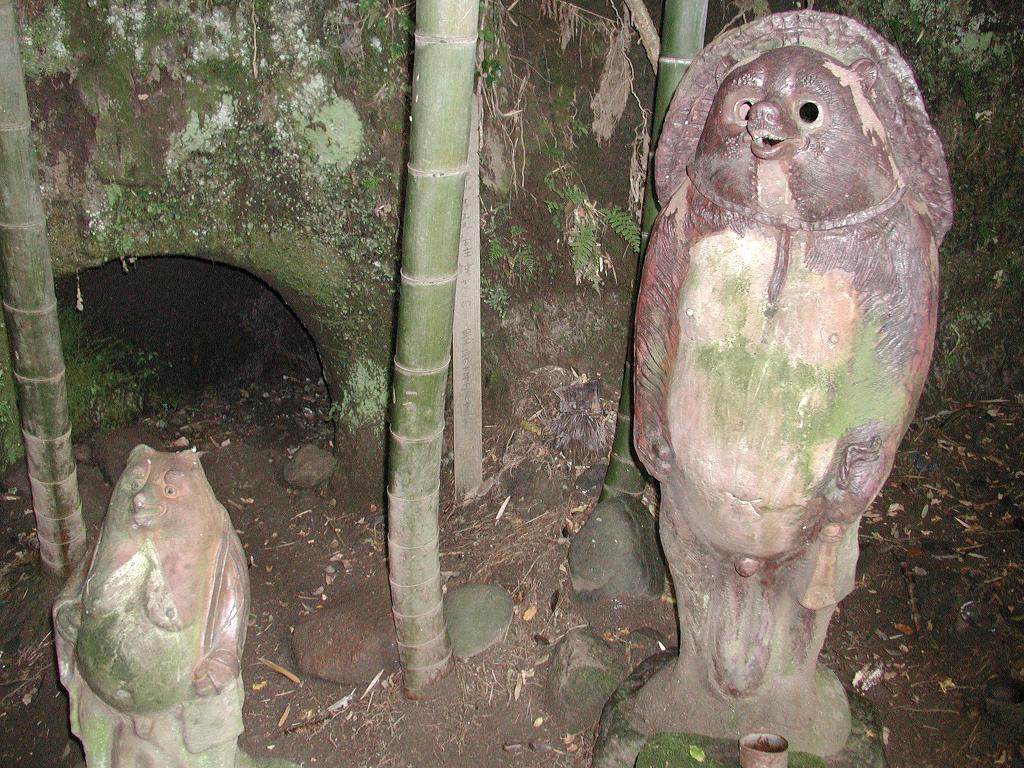
During my trip to Japan, I spotted this peculiar creature all around Kyoto. I saw one just outside of my Airbnb homestay, guarding the house like a gnome. They also come in groups, like the ones I saw at a train station in Kameoka. They look like some sort of owl-headed bear, with a big fat belly, wearing a farmer hat. What I didn’t notice at the time, was the fact they had another prominent feature, BIG BALLSACKS! More on that later.
So What are These Mysterious Creatures?
“What are these creatures?” I asked myself when I first saw them. But I was quickly distracted by other things. While I was scrolling through the pictures back in Malaysia, I noticed these odd statues again, so I decided to find out the mystery behind them. I typed in “Kameoka Station statue” and out came the answer.
Tanuki - A Semi-Mythical Creature
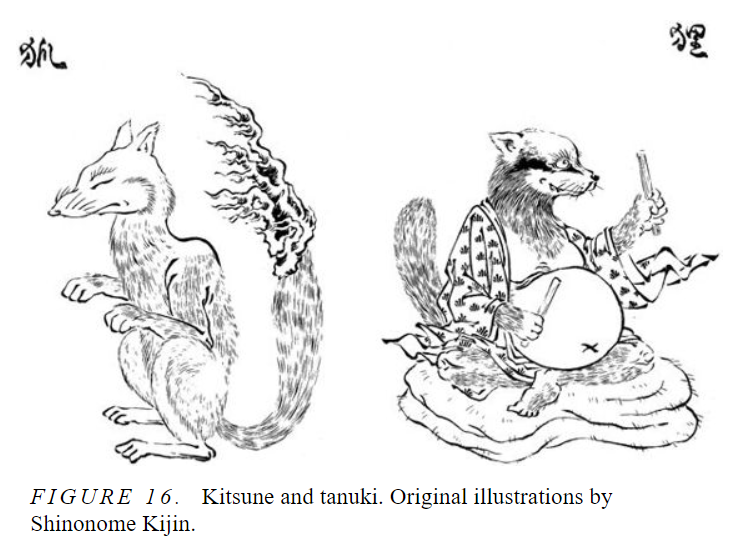
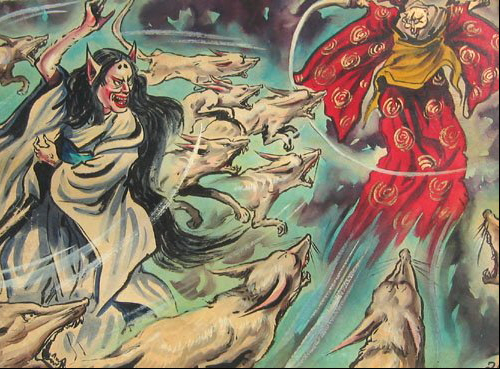
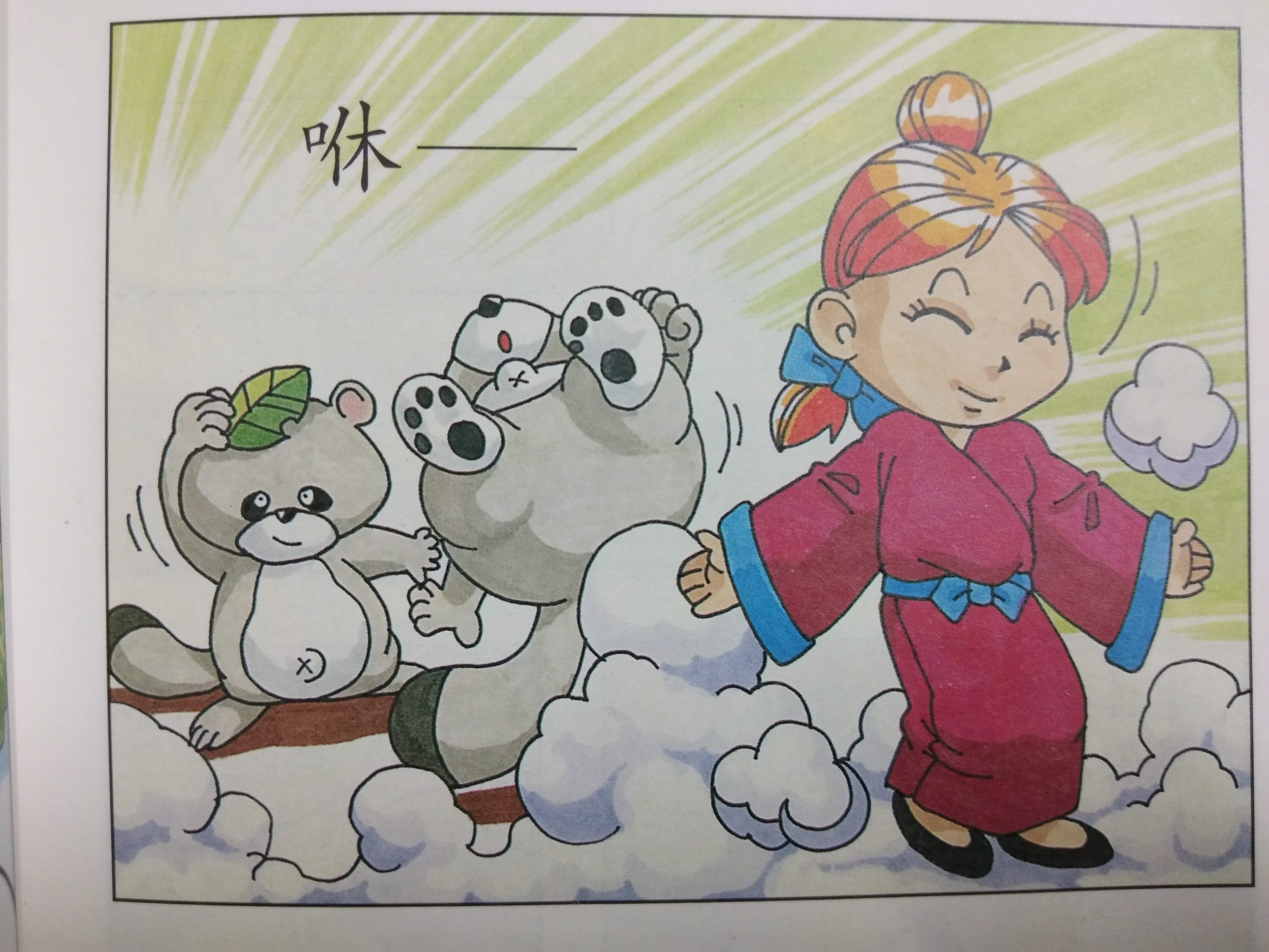
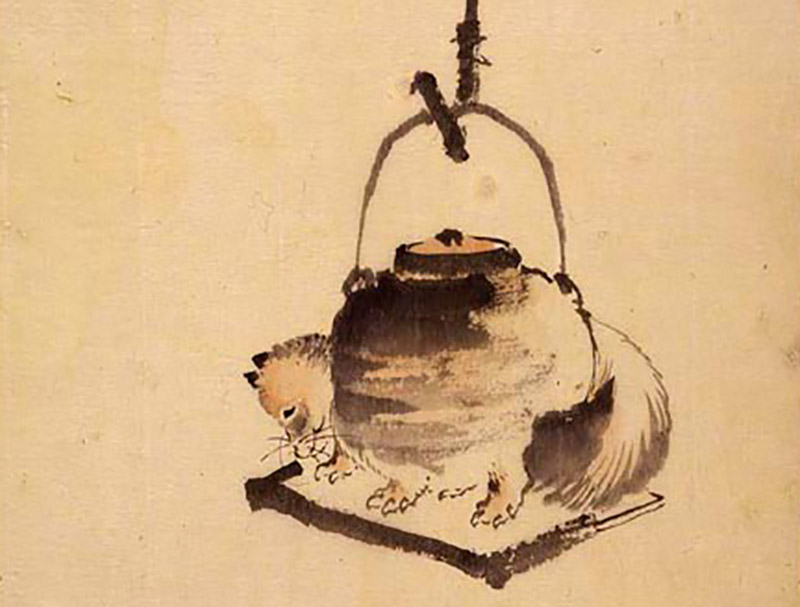
The creatures I saw are called tanuki (たぬき) in Japan, or Japanese Raccoon Dog in English, and 貉 or sometimes 狸猫 in Mandarin. It is featured prominently in Japanese folktales and legends. Tanuki — or more accurately bake-danuki (化け狸) — has shapeshifting ability, and they like to trick people by changing into people and various objects. It is considered a yokai 妖怪 (supernatural creature), along with the likes of kappa and tengu.
Kitsune (fox) is another creature with shapeshifting ability, but there is a saying 「狐七化け狸八化け」which roughly translates to “Fox has seven forms, and tanuki has eight forms”, showing the superior shapeshifting skill of a tanuki. Unlike a fox, which is usually more serious, a tanuki possesses a more mischievous trait, often tricking people for the heck of it.
Tanuki often use leaves as a tool to assist them in their trickery. Tanuki will put a leaf on their head before transforming. They will also buy things with money that will turn into leaves after they’re long gone.
Tanuki Legends
Now that you’re acquainted with a tanuki, it’s time for some tales. There are many folktales and legends about tanuki, ranging from creepy ones, funny ones, and ones with a moral lesson.
There is a creepy legend in Miyoshi, where tanuki will lure people to hang themselves. The story roughly goes that a lady convinced her lover to both hang themselves, as their parents didn’t approve of their relationship. Some passerby saved the men and they found out that the woman was a tanuki all along, and the real lady was still alive.
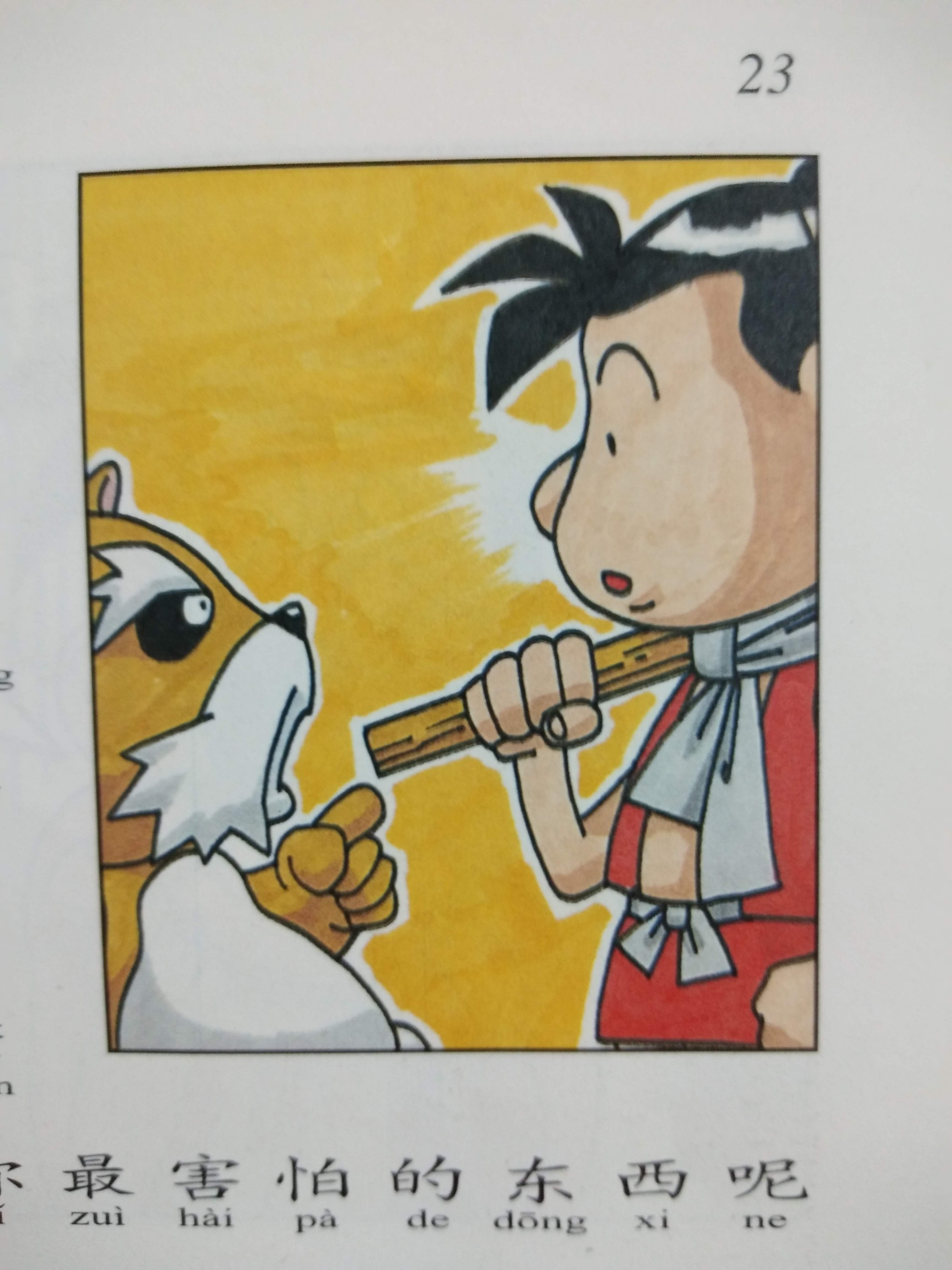
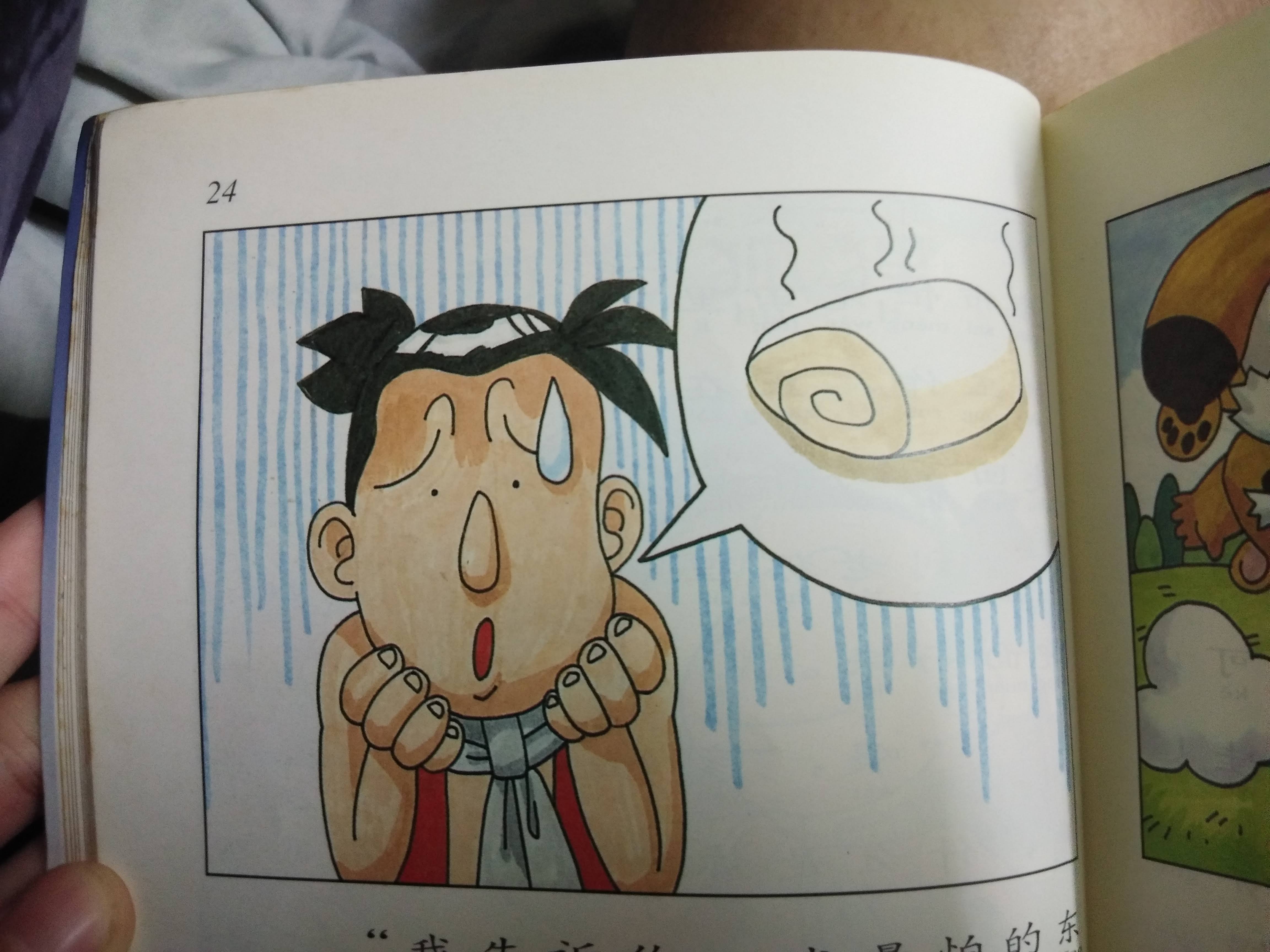
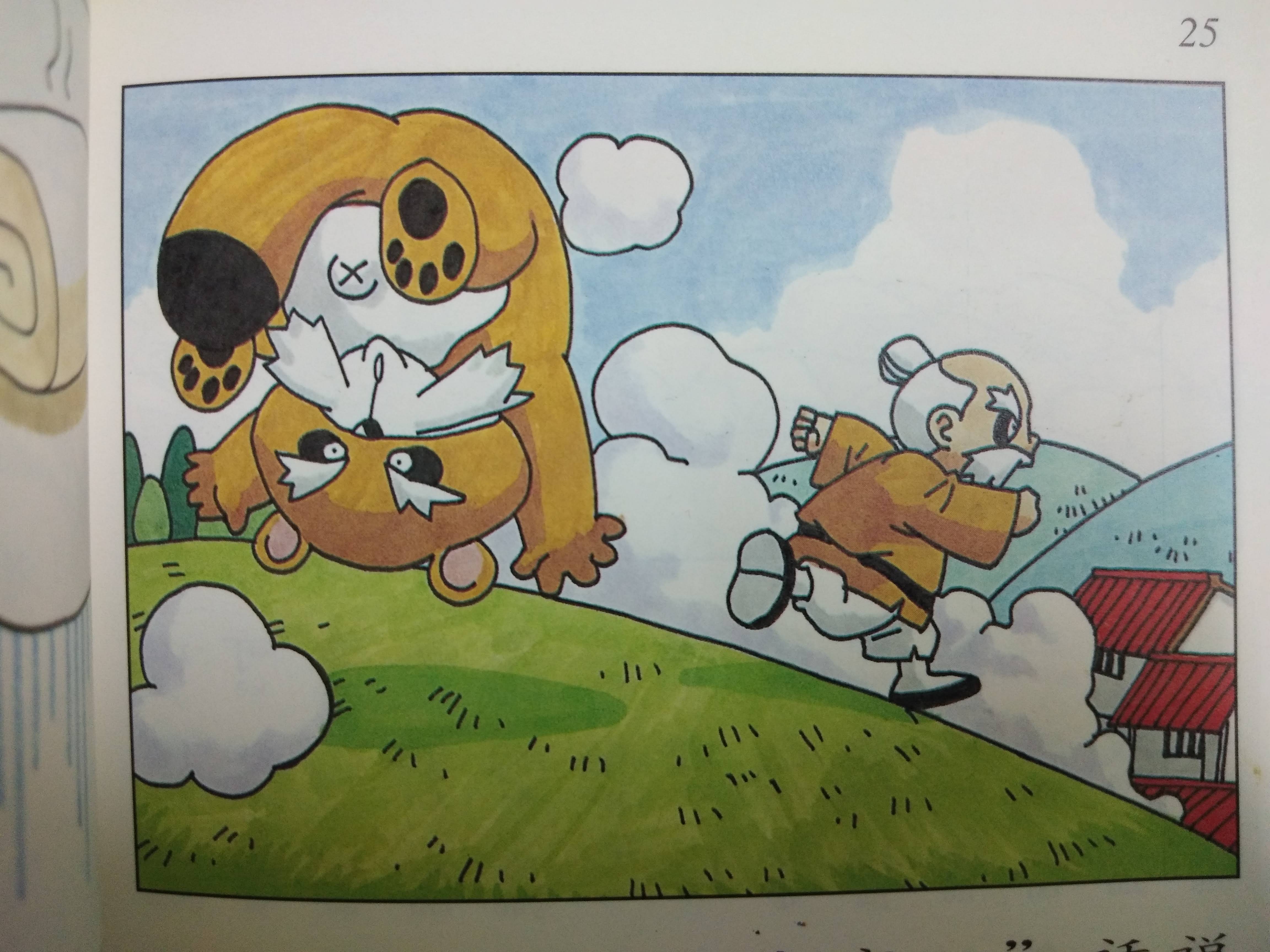
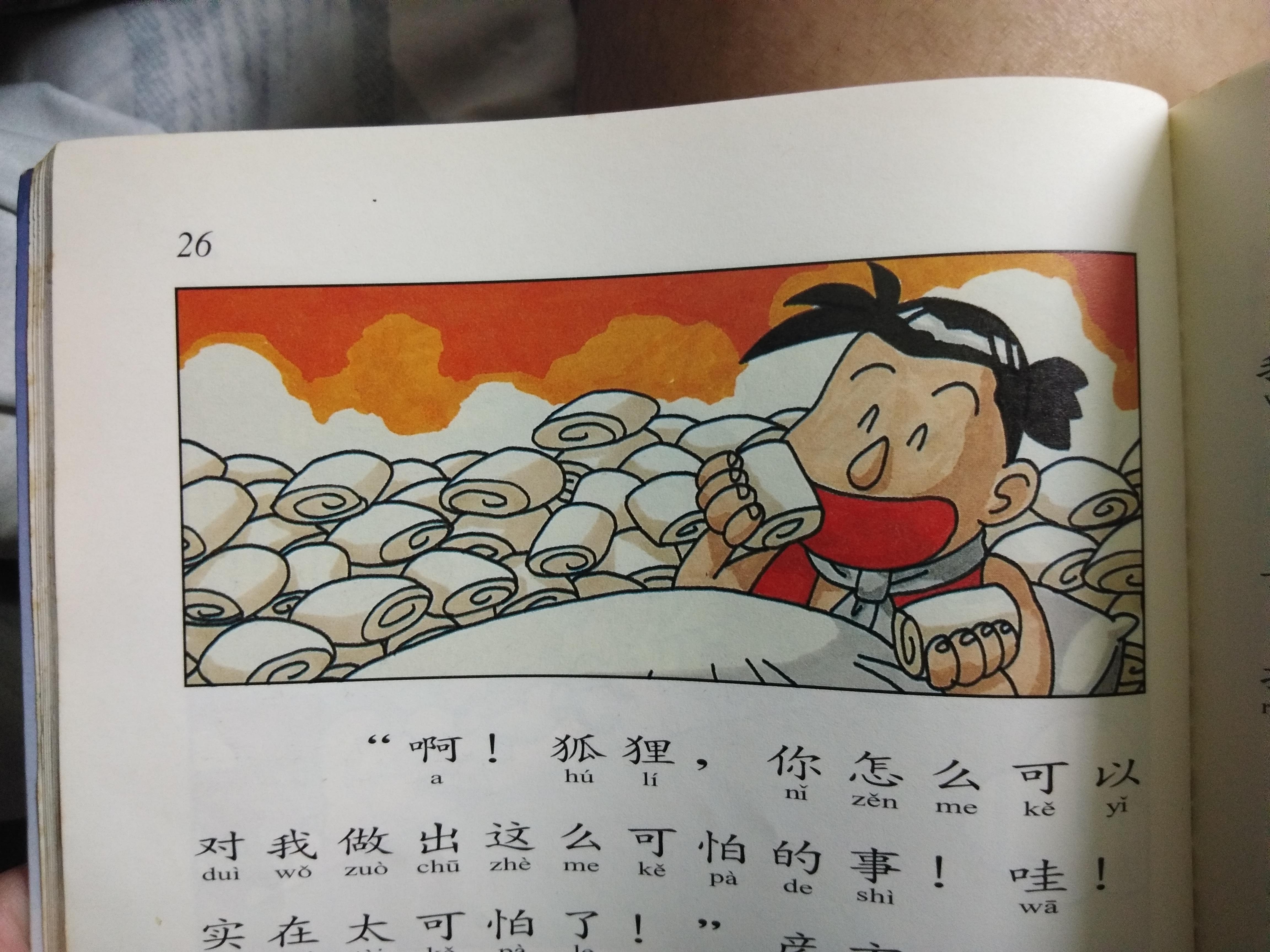
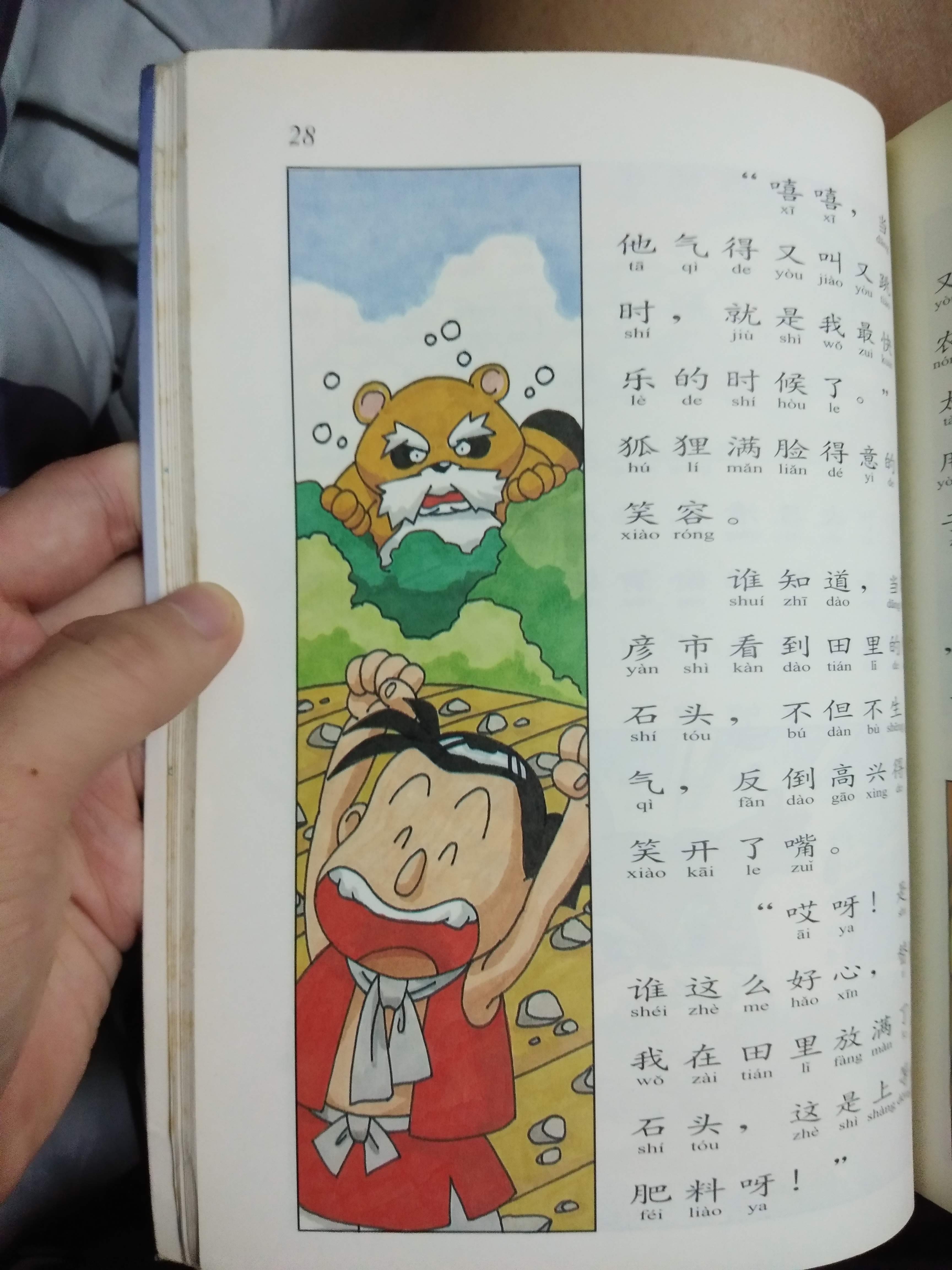
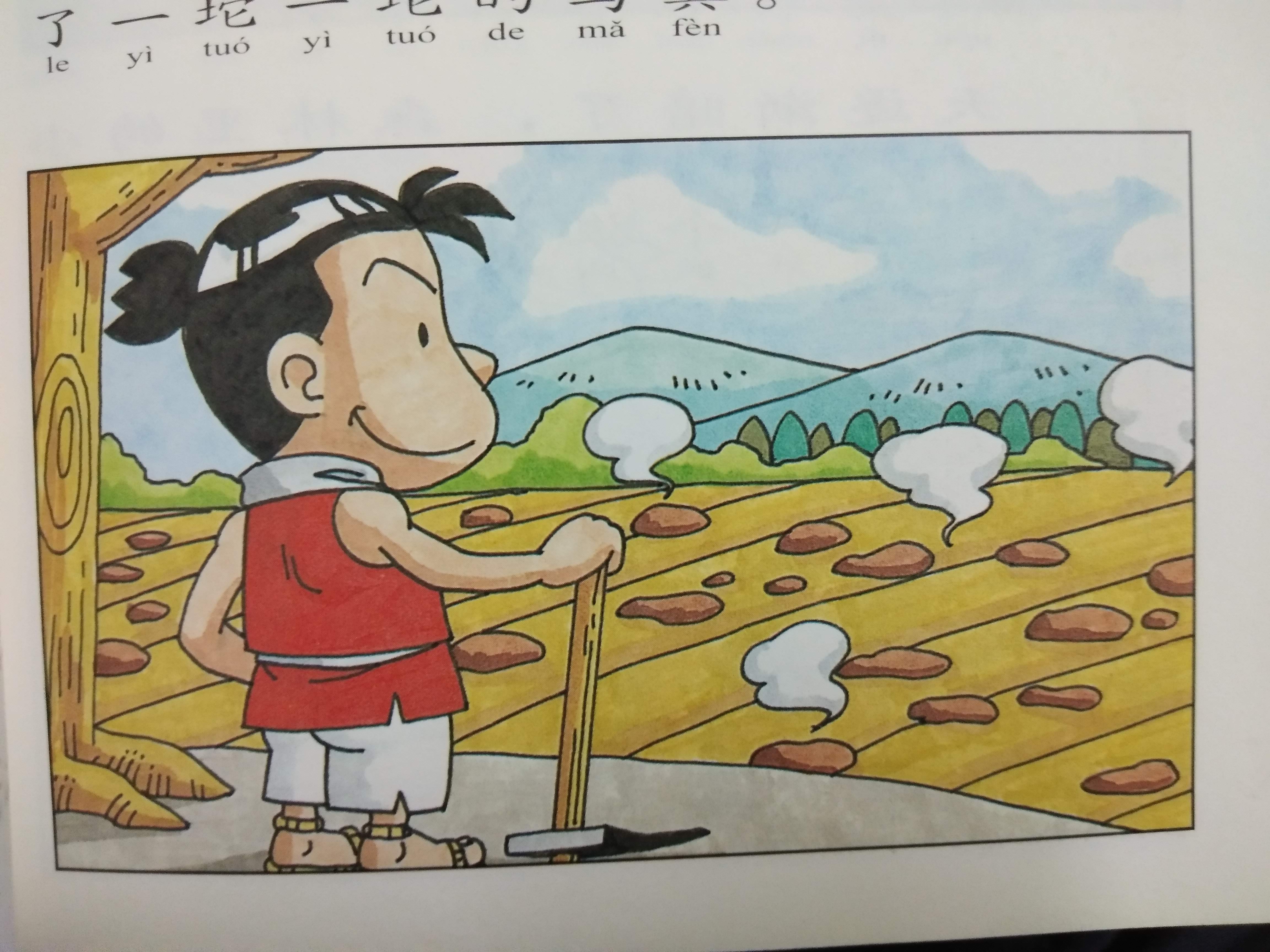
In another story, a farmer named Hikoichi successfully countered the tanuki tricks, by tricking the tanuki into giving him steamed buns and fertilizing his farm. He told the tanuki his greatest fear was steamed buns, and it would be awful to have horse shit on his patch of farm. The tanuki ended up supplying him with many steamed buns, and fertilized his farm — all for free.
Origin of the Tanuki Statues
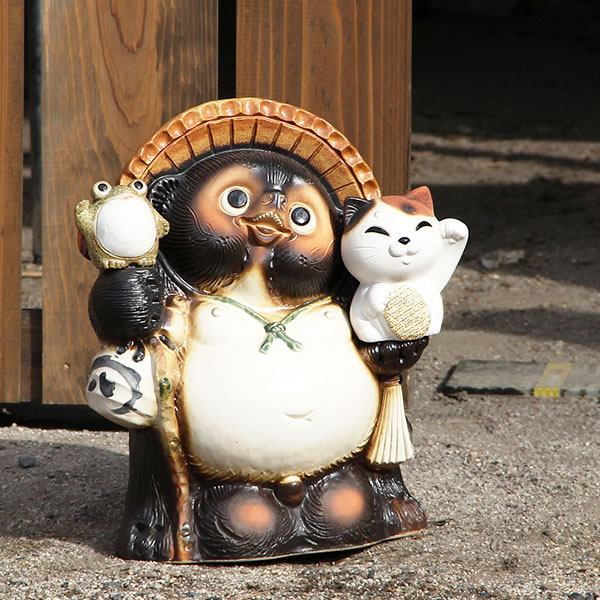
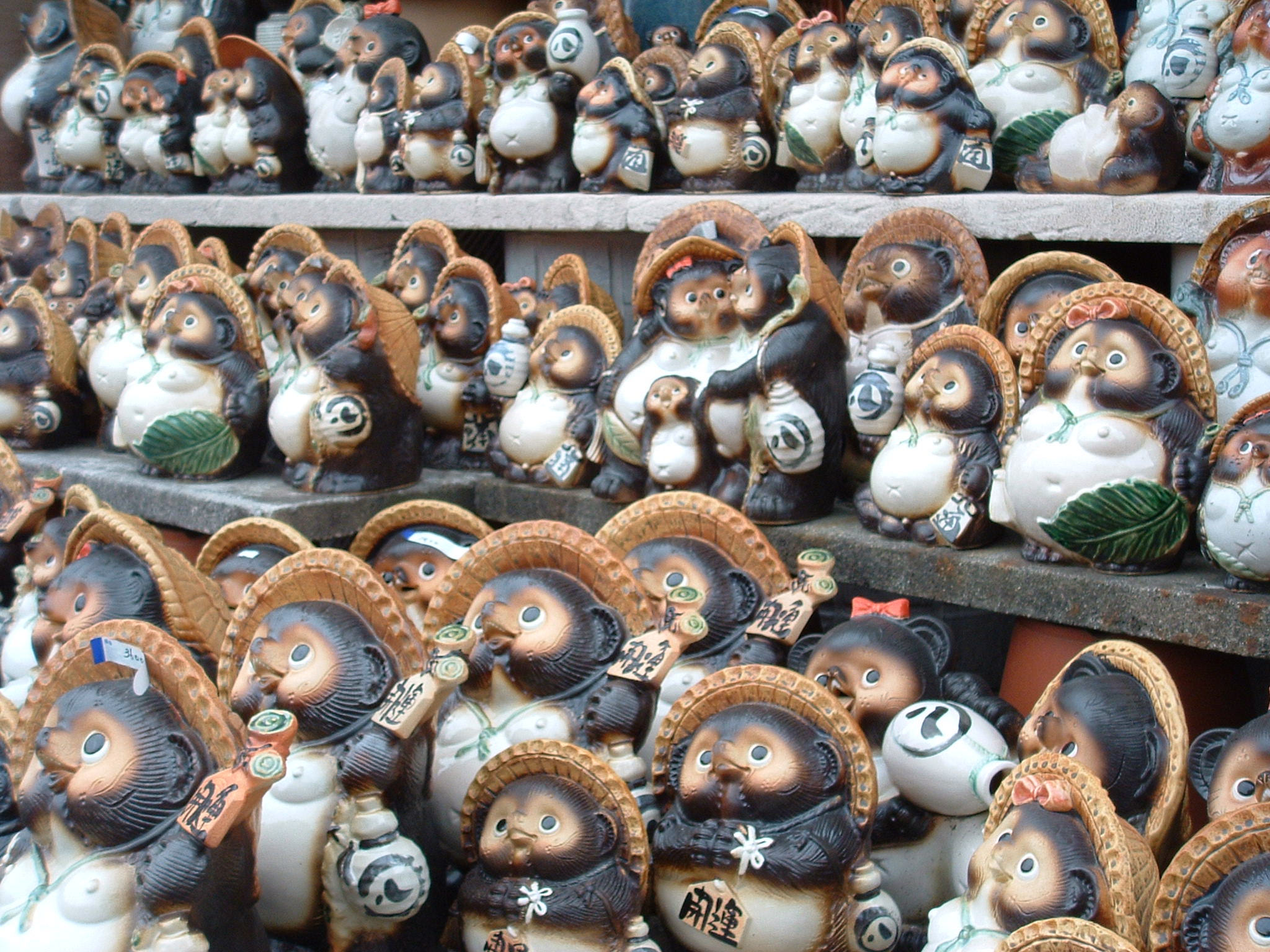
With tanuki’s reputation as a trickster in Japanese folklore, why did they get made into statues that are popular across Japan?
Most of the tanuki statues found around Japan are Shigaraki-yaki (信楽焼), a type of ceramic ware made in the town of Koga in Shiga Prefecture. The common tanuki statues found in Japan are designed by Tetsuzo Fujiwara, a potter who moved to the area in 1936 and devoted the rest of his career to tanuki statuary. He “cutified” the tanukis from their evil look to an adorable creature.
In 1951, Emperor Hirohito paid an Imperial visit to the town, and the town prepared a special row of flag-waving tanuki statues. Emperor Hirohito was so charmed that he wrote a poem about it. The resulting publicity contributed greatly to the popularity of the statues.
It is common to see these statues in front of business establishments as they’re believed to bring good fortune and wealth — playing a similar role to Maneki Neko, the Beckoning Cat.
The Eight Traits of a Tanuki Statue
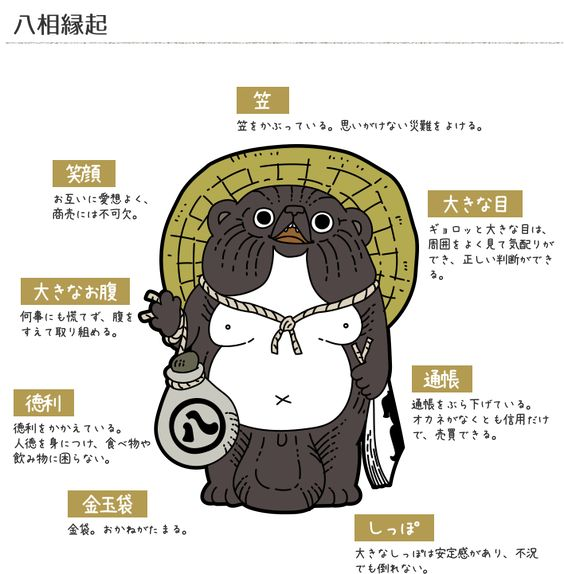
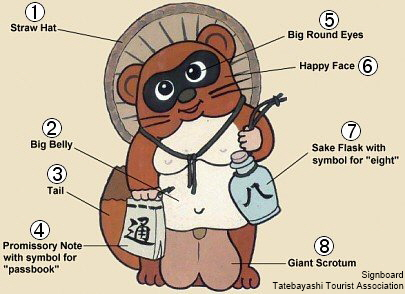
The tanuki statues are often depicted with these eight traits, symbolizing its eight virtues:
- The big belly signifies bold and calm decision making.
- The promissory note represents trust and confidence.
- The bottle of sake represents virtue.
- The big tail represents steadiness and strength.
- Oversized scrotum symbolize financial luck.
- Big eyes symbolize the capability to judge the environment and make good decisions.
- The straw hat symbolizes readiness and protection against bad weather (meaning bad times).
- The friendly smile supposedly means a friendly attitude towards customers.
Tanuki and Their Magical Ballsack
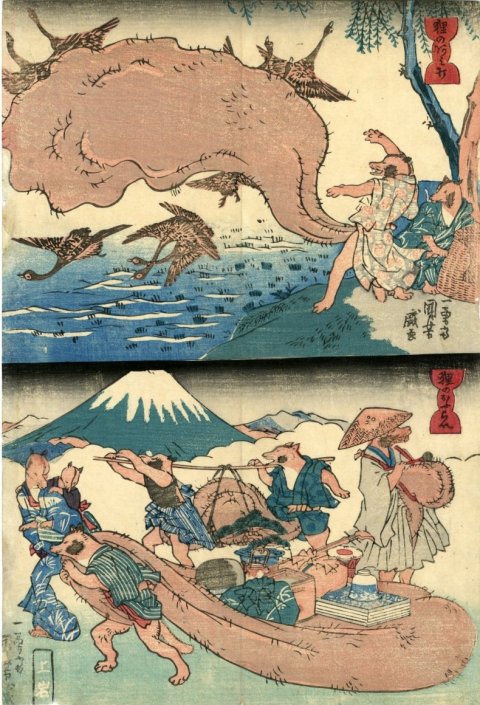
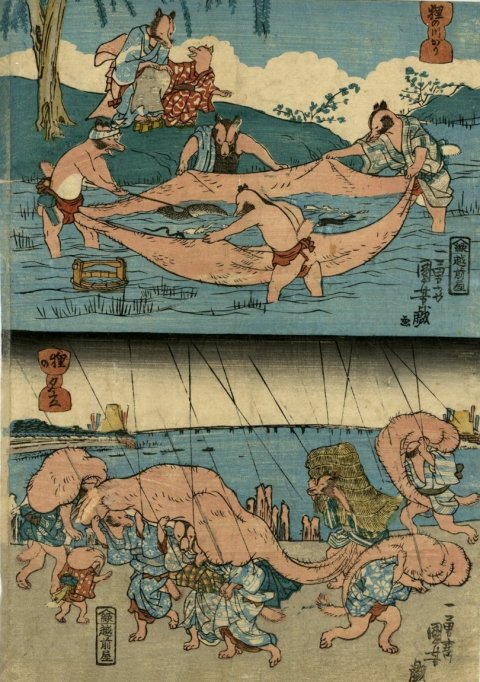
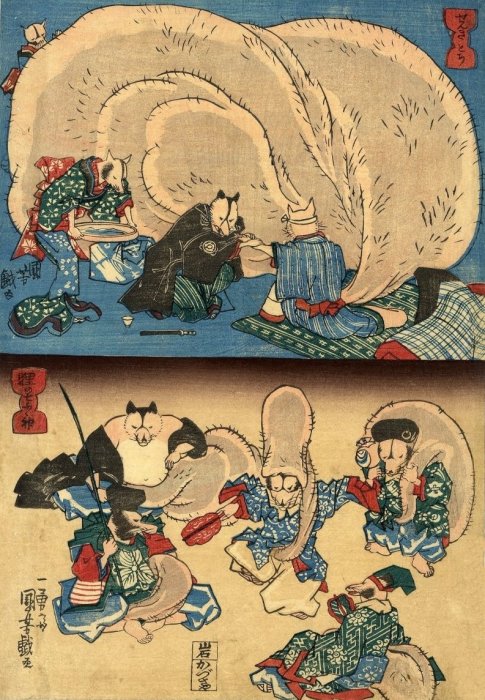
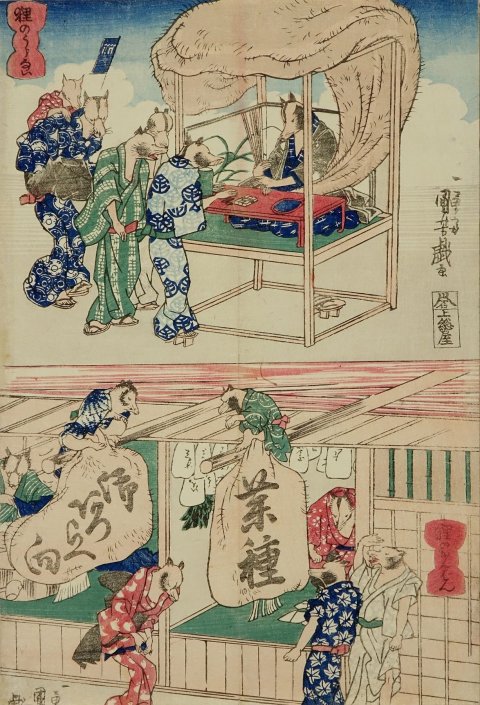
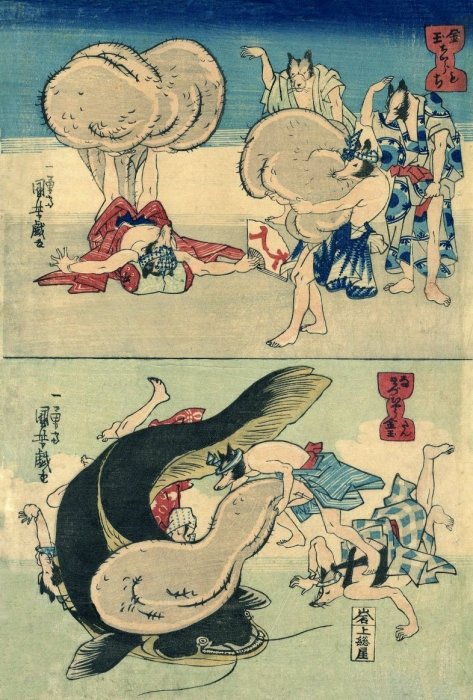
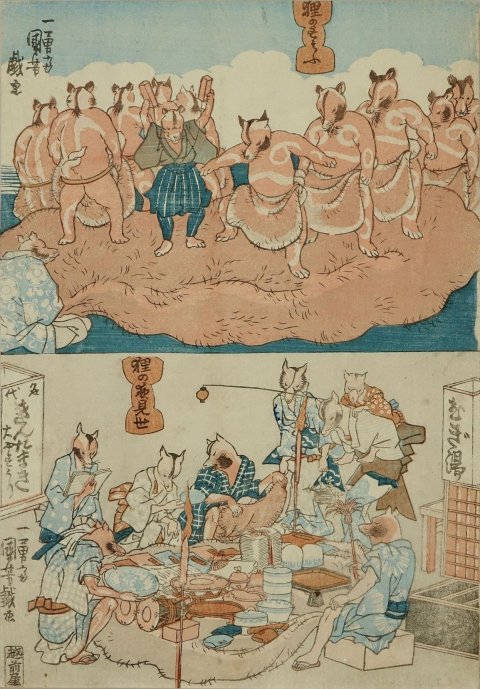
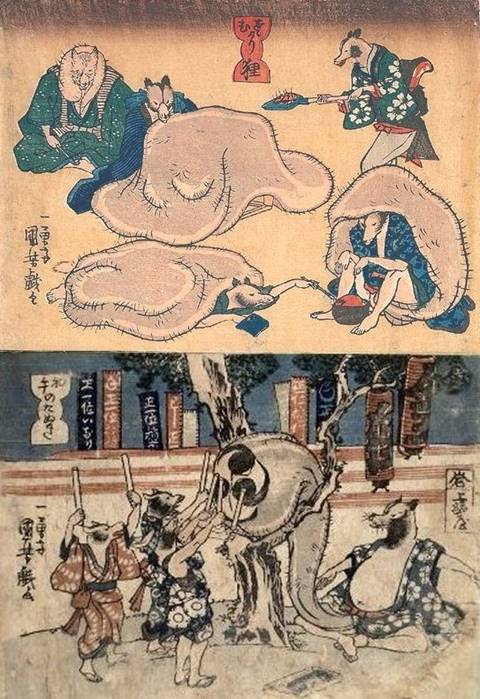
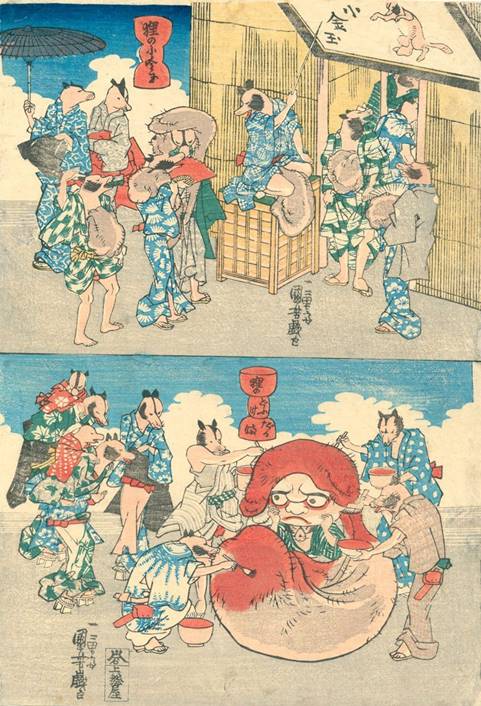
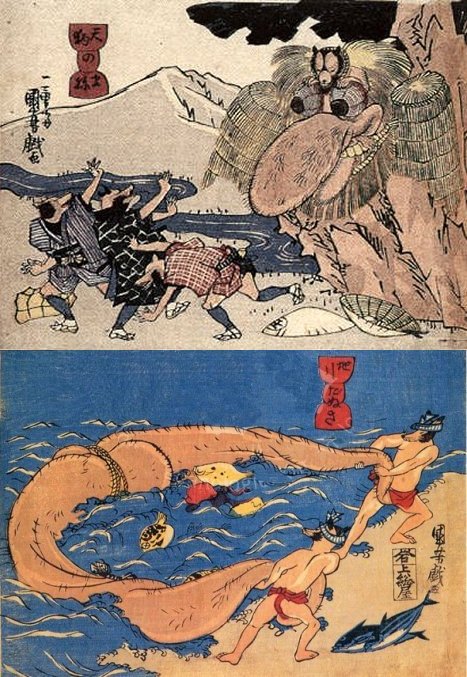
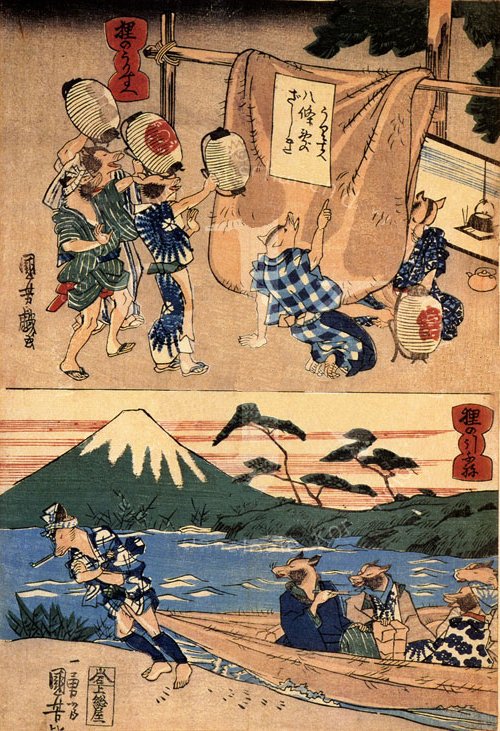
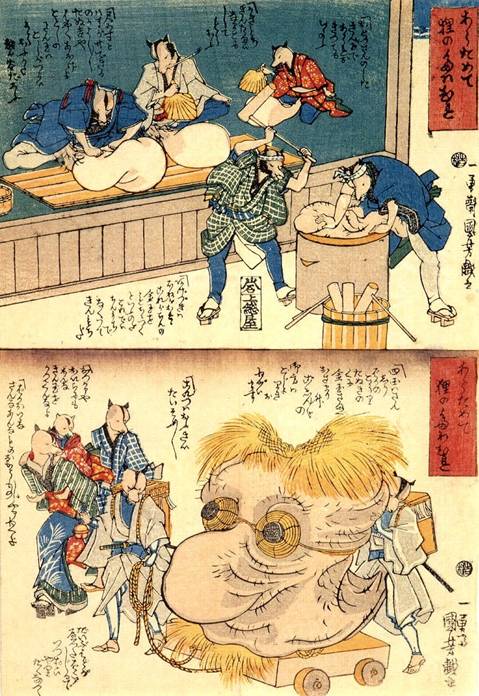
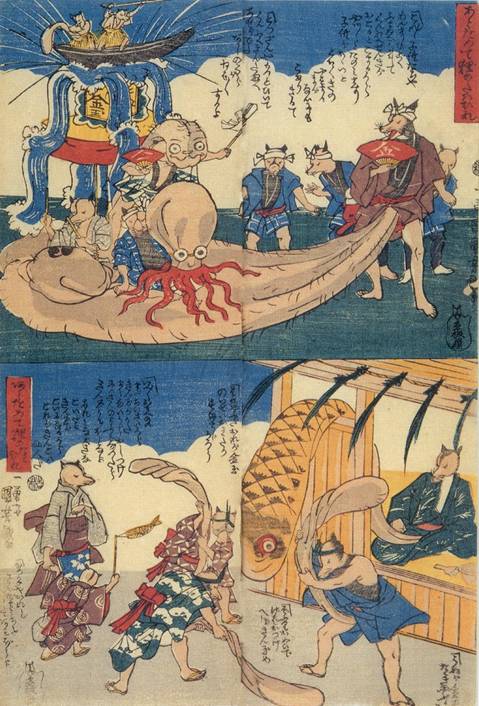
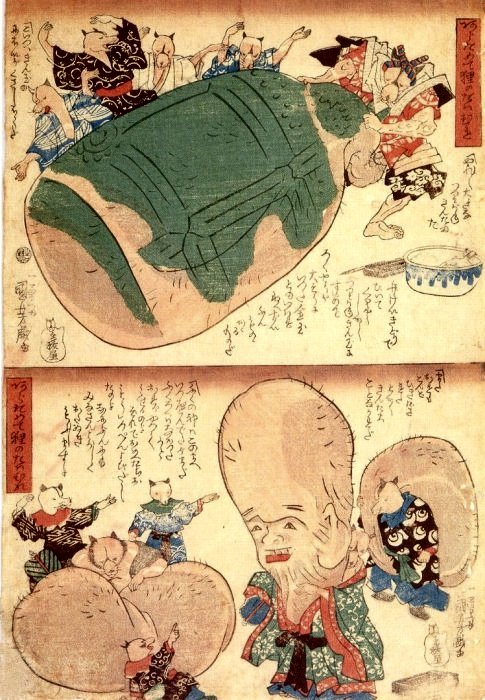
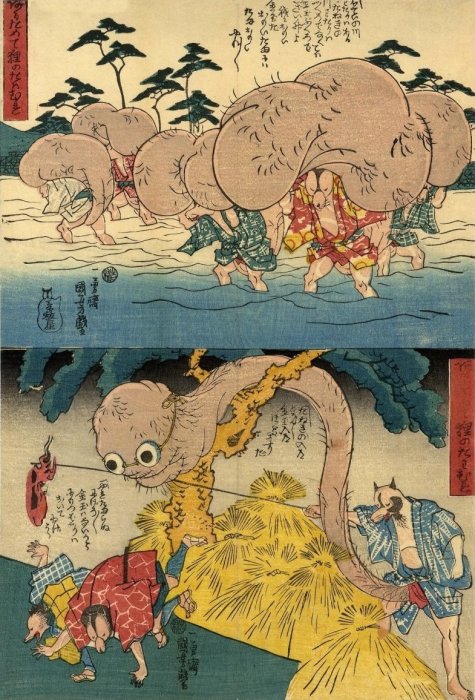
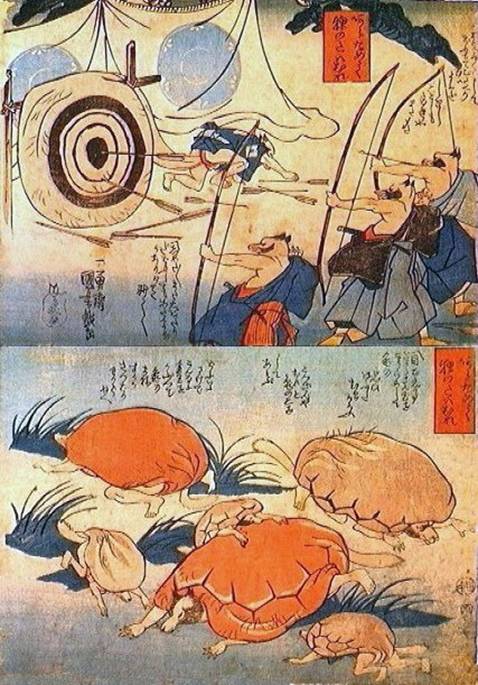
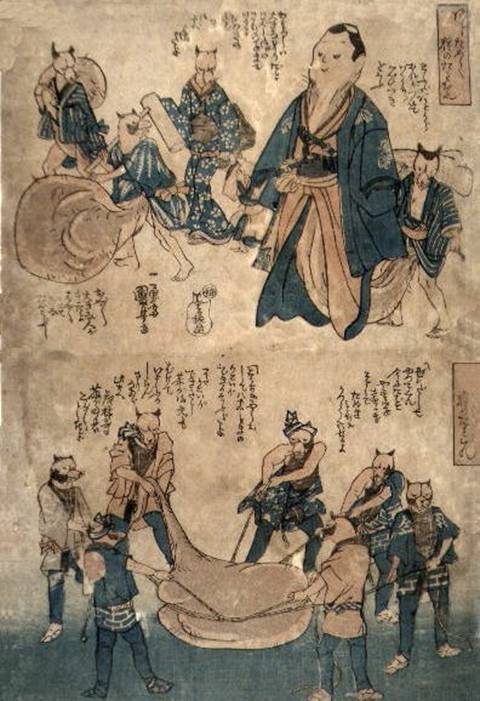
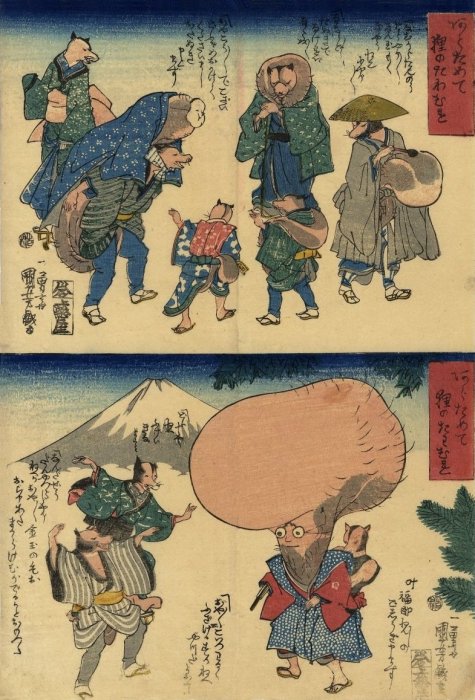
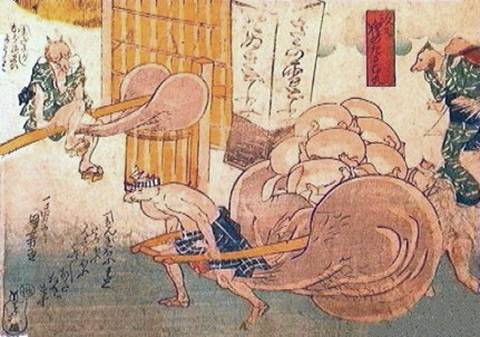
Now we have reached the most anticipated section — to show you the magical ballsack of tanuki, and explain how and why the legend came to be.
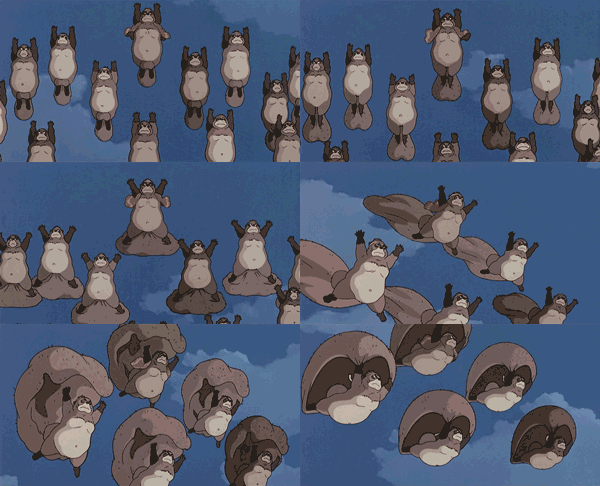
As you can see in these images, tanuki are depicted to use their magical, flexible ballsack for just about anything: from using them as shade, to carrying things, as an archery target, as a fishing net, as shop signs, as a boat, as a drum, and a plethora of other activities.
It is said that the ballsack of tanuki can be stretched to the size of eight tatamis. Believe it or not, the exaggerating size of tanuki’s ballsack has nothing to do with their sex prowess, but rather it means “luck with expanding one’s money and wealth.”
The legend begins in the Kanazawa prefecture. The goldsmiths there would wrap malleable gold in animal skin and pound it until it turned into thin sheets. It was said that gold is so malleable, and tanuki skin so strong, that even a small piece of gold could be thinned to the size of eight tatami mats. Some people got confused about what is being stretched, and artists played around with the idea of a stretchy scrotum — and thus, the legend was born.
The Real Tanuki
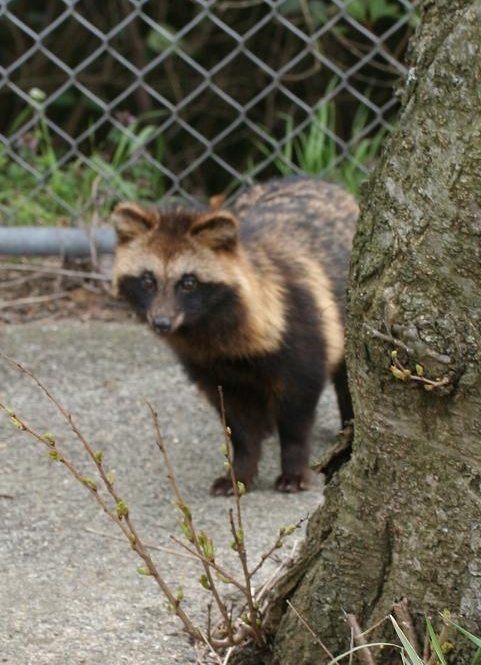
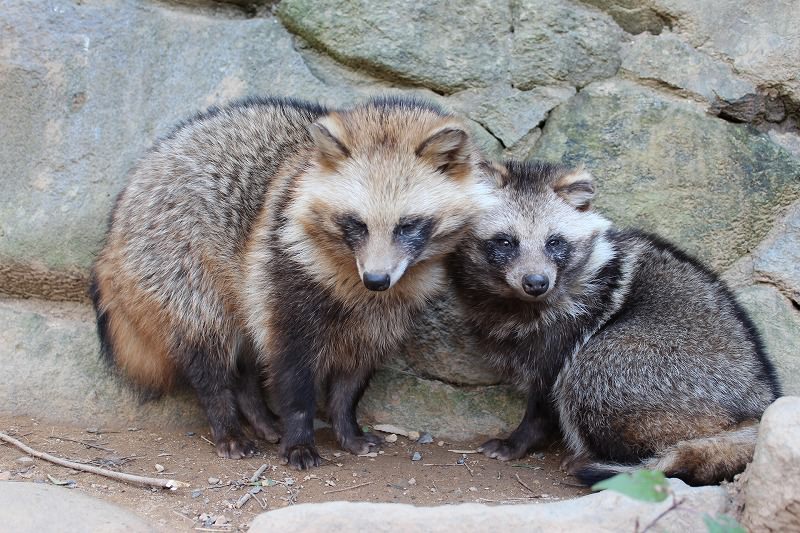
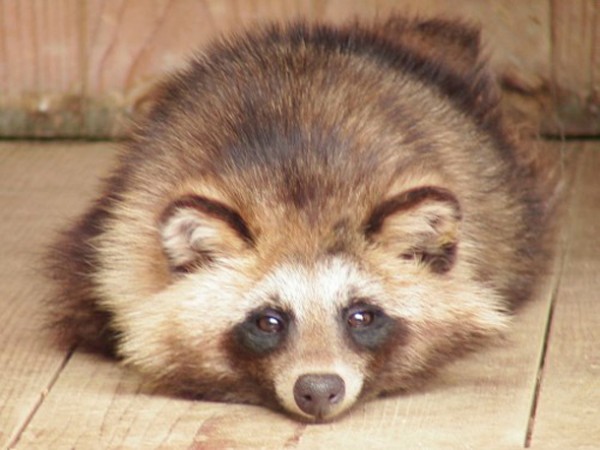
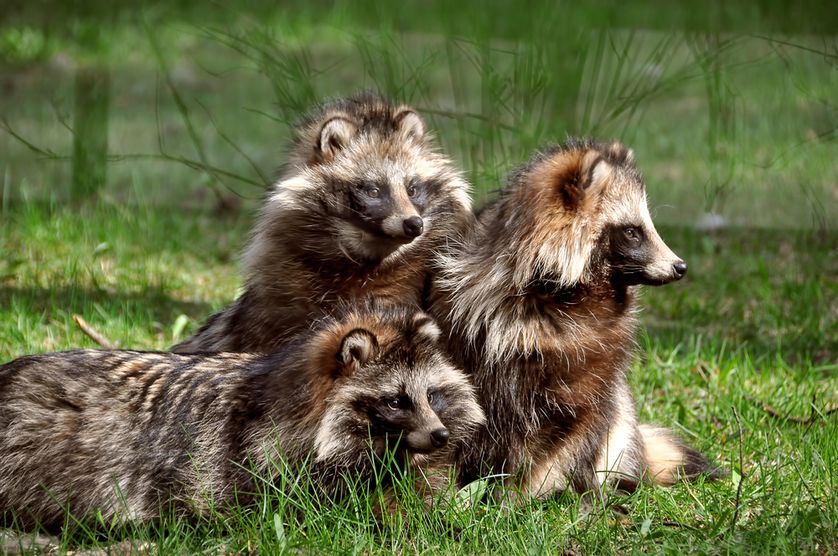
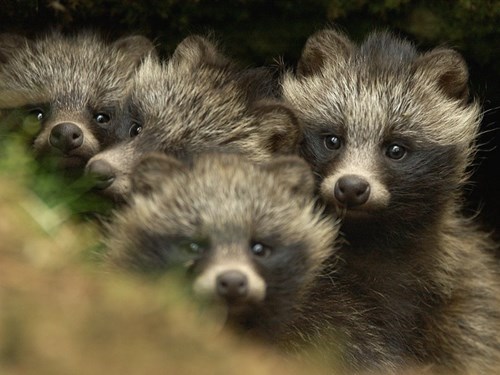
So how is a tanuki like in real life? Tanuki is known as Japanese raccoon dog, but don’t let the name fool you — it is closer to a fox than a dog or raccoon. However, they share the common trait of being a member of the canine family.
Although a nocturnal animal, tanuki can be found active during the day. They are omnivorous and can eat anything, from fruits and berries to small animals. Tanuki is also one of the rare species in the mammalian family to live lifelong in pairs — and one of the few members of the Canid family to hibernate over winter.
Tanuki in Popular Culture



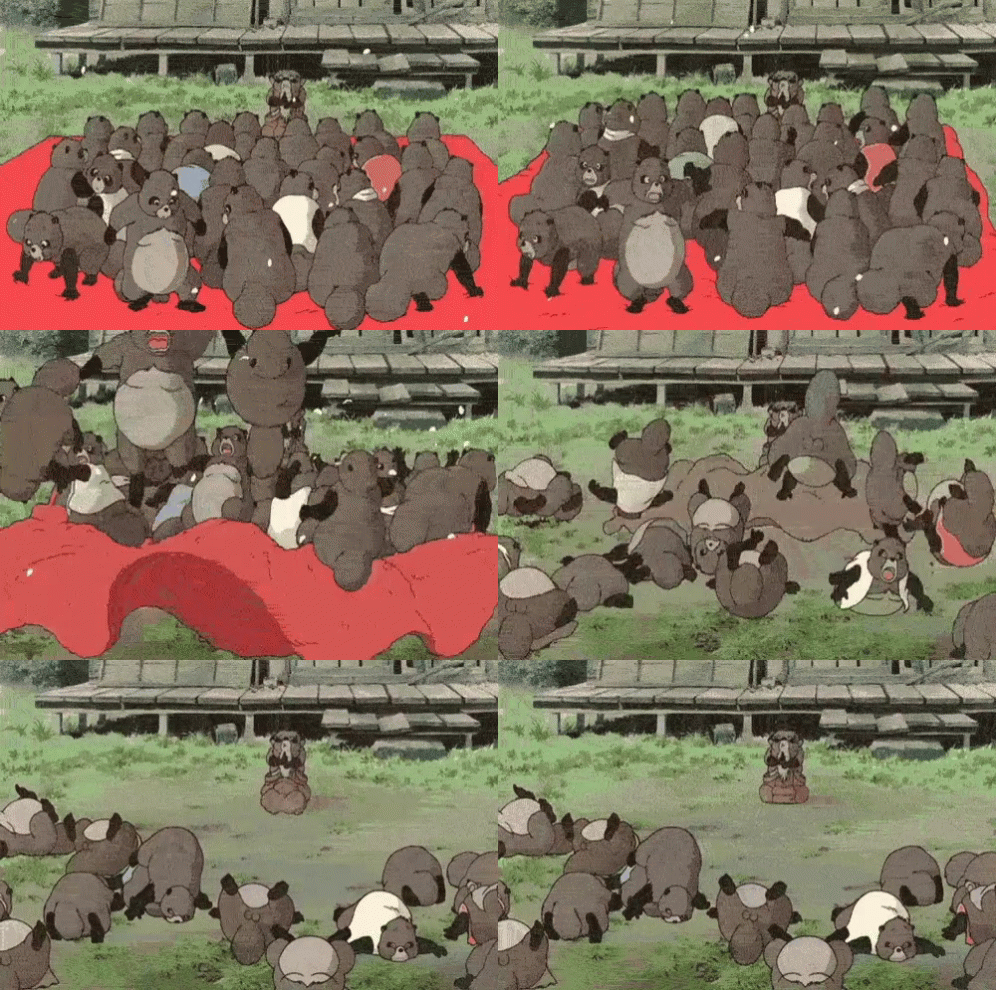
Being such a popular animal in Japan, it’s not hard to find tanuki in popular culture. Ghibli Studio’s Pom Poko is a movie centered around a group of tanuki, and their struggle to survive in the modern world as mankind expands into their territory. In one scene, a group of tanukis even attack humans with their magical ballsack. I will definitely recommend anyone to watch it.
In some Mario games, Mario can obtain a Tanooki Suit that allows Mario to transform into an invulnerable Jizō statue. In Mario & Luigi: Superstar Saga, a Tanoomba (a combination of Goomba and Tanuki) can be found as enemies in the game.
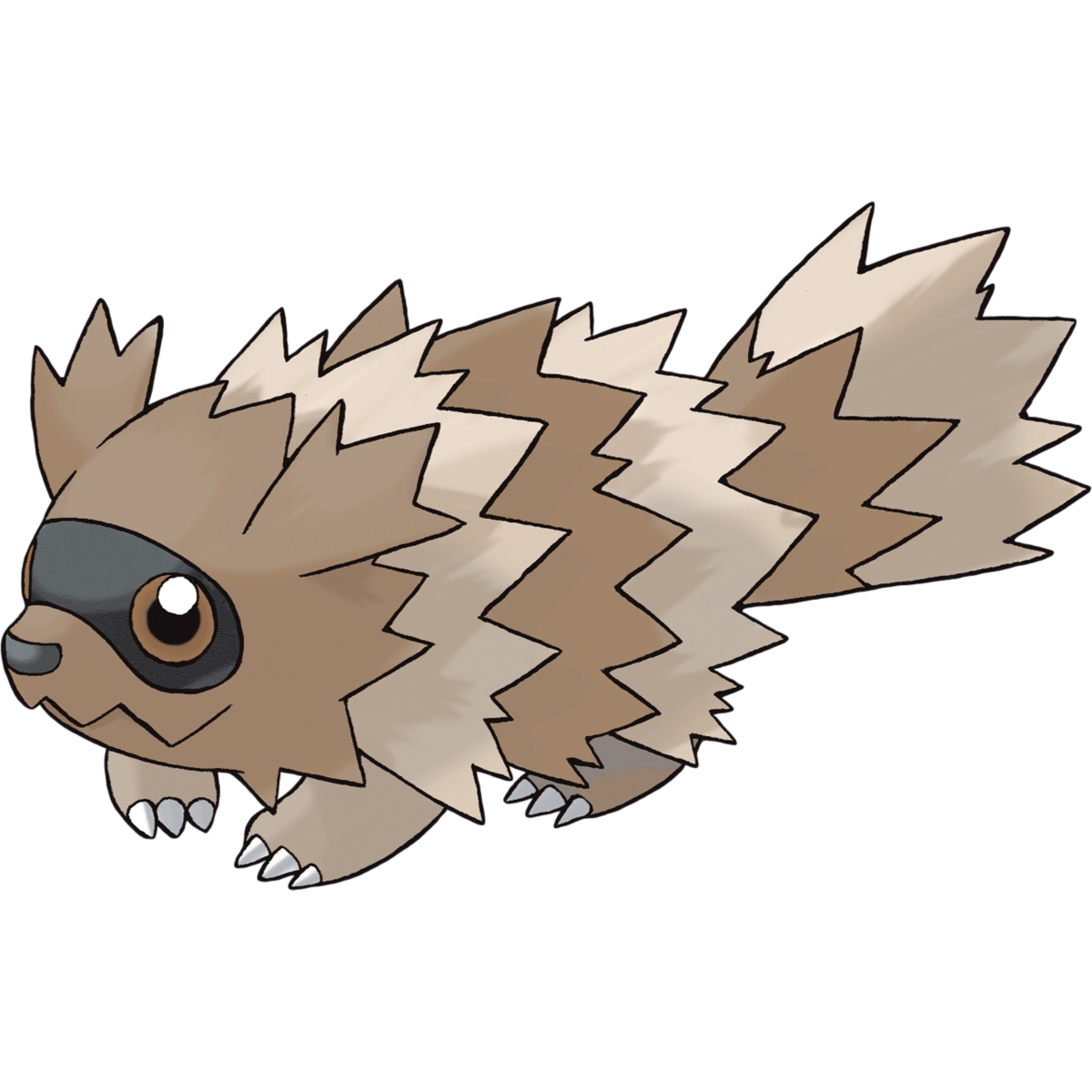
Zigzagoon from Pokémon is possibly inspired by tanuki and raccoon.
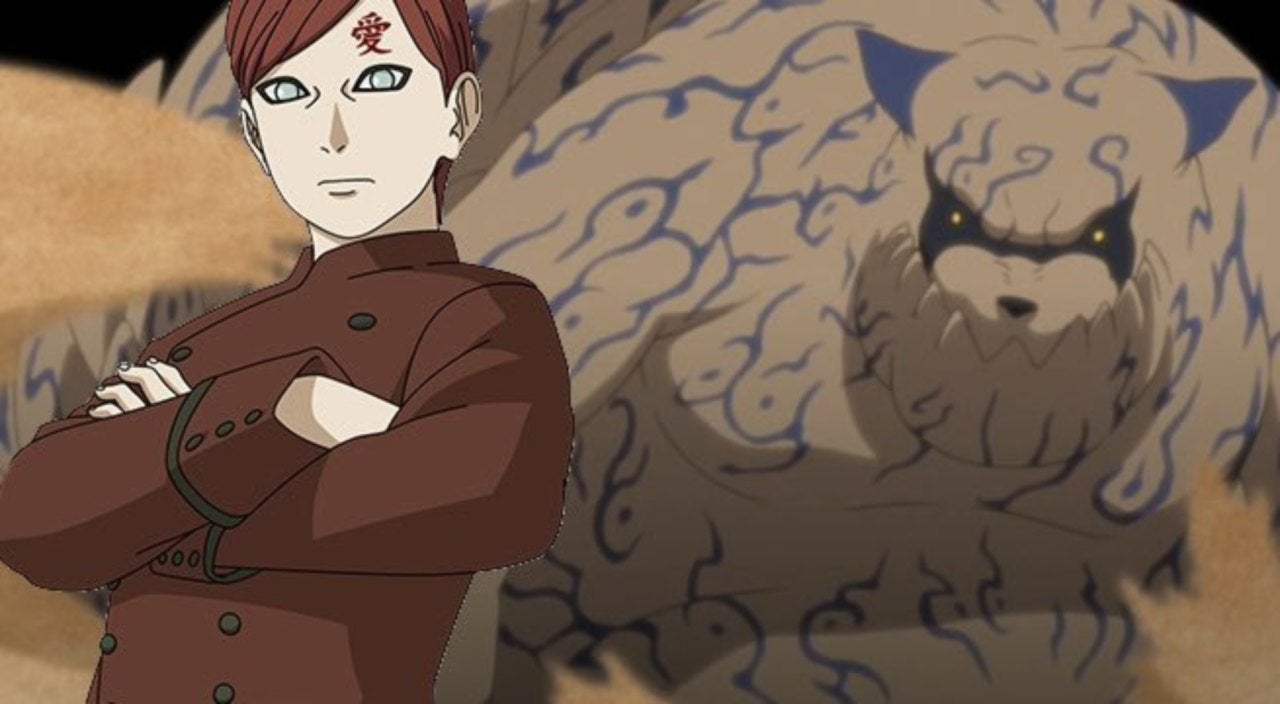
In Naruto, one of the nine-tailed beasts Shukaku is a tanuki, and the plot of this beast is related to Bunbuku Chagama, a Japanese folktale about a tanuki that uses its shapeshifting powers to reward an old man who rescued it.
End words
What started as my curiosity turned into a cultural lesson. I hope you enjoy this post and have learned a thing or two about this unique creature, as well as some Japanese culture.
Read More